
October Birthstone: Tourmaline
October is one of the few months with two birthstones: tourmaline and opal. Known for its remarkable range of colors, tourmaline can be found in shades ranging from soft pink and vibrant green to deep blue and nearly every color in between. Its variety, fascinating history, and rich symbolism have helped make it a beloved gemstone. Opal, October's other birthstone, is equally distinctive for its shifting flashes of color and has a history and character all its own.
What Is Tourmaline?
Tourmaline isn't actually a single mineral species. It is a mineral supergroup made up of many closely related species with different chemical compositions. Those chemical differences are one of the reasons tourmaline can occur in such an extraordinary range of colors.

Various tourmaline crystals.
(Source)
The Five Major Species
Although more than 40 tourmaline species are now recognized, five are particularly important in gemology: elbaite, liddicoatite, dravite, uvite, and schorl. The differences between them are primarily chemical, so they aren't always distinguishable simply by looking at a finished gemstone.
Elbaite
Named after Italy's island of Elba, the source of its formal discovery, Elbaite is the most important tourmaline species in the gem trade. This is because most of the tourmaline used in jewelry belongs to the elbaite species. Rich in lithium, sodium, and aluminum, elbaite has the broadest range of gem colors. It can occur in pink, red, green, blue, yellow, orange, and colorless varieties, as well as crystals containing multiple colors.
Liddicoatite
Rich in calcium, lithium, and aluminum, liddicoatite is particularly well known for its dramatic color zoning, a term that refers to distinct areas of different color or color intensity within a gemstone. While color zoning can appear as bands, patches, or gradients in some gemstones, liddicoatite is especially remarkable for its striking geometric patterns in vibrant colors. The species was named after Richard T. Liddicoat, a former president of GIA who made significant contributions to modern gemology. While much rarer than elbaite, liddicoatite is so similar in structure and appearance that distinguishing the two generally requires chemical analysis.

Liddicoatite from Anjanabonoina, Madagascar.
(Source)
Dravite
Also known as "brown tourmaline", dravite was first discovered along the Drava River in modern-day Slovenia. A sodium-, magnesium-, and aluminum-rich tourmaline species, dravite is typically found in brown, yellowish-brown, or brownish-black colors.
Uvite
Uvite is a calcium-, magnesium-, and aluminum-rich species of tourmaline that commonly occurs in green, yellow, and brown shades. Like dravite, it can form in limestone that has been altered by heat and pressure, and dravite-uvite mixtures can produce some attractive gem-quality tourmalines.
Schorl
Typically black or very dark in color, schorl is the iron-rich species of tourmaline. It is one of the most common forms of tourmaline in nature and occurs in a variety of rock types. Although rarely used as a gemstone, it has been featured in mourning jewelry, a tradition particularly associated with the Victorian era when black jewelry and clothing were worn to signify grief.

Tourmaline Colors & Names
Tourmaline is known for its extraordinary range of colors, and many of its most recognizable color varieties have their own names. Unlike the mineral species discussed above, these names describe a tourmaline’s color or appearance rather than its underlying chemical classification.

Rubellite
Originally mined extensively in the United States, rubellite refers to pink, red, purplish-red, orangy-red, or brownish-red tourmaline. Because the term is sometimes used for pink tourmaline, there is some disagreement within the trade over whether particularly light pink stones should be called rubellite.
Indicolite
The term indicolite, derived from the word indigo, refers to dark violetish-blue, blue, or greenish-blue tourmaline. Its blue color is commonly associated with iron, and indicolite is generally darker and less intensely saturated than the vivid blue-to-green tourmalines known as Paraíba.
Paraíba
Paraíba tourmaline is known for its exceptionally vivid blue, greenish-blue, violetish-blue, or green colors. The first of these stones were discovered in the Brazilian state of Paraíba in the late 1980s, where their intense color quickly made them highly sought after. Unlike indicolite, whose blue color is commonly associated with iron, the distinctive colors of Paraíba tourmaline are primarily caused by copper and manganese. Similar copper-bearing tourmalines were later discovered in Nigeria and Mozambique, so the term “Paraíba” is now used as a trade designation for this distinctive type of tourmaline rather than simply referring to stones mined in the Brazilian state.
Verdelite
Verdelite is a traditional name for green tourmaline whose color is generally associated with iron, and possibly titanium. The name describes the stone's color rather than its mineral species, so verdelite can occur in more than one type of tourmaline. Green tourmaline is found in a range of shades, from lighter greens to deeper, more saturated hues.
Chrome Tourmaline
Chrome tourmaline refers to intensely green tourmaline, particularly material with a rich, saturated green color. Its name comes from the association with chromium, but vanadium can also be responsible for the color, and some stones sold as chrome tourmaline are colored primarily by vanadium rather than chromium. These elements can produce greens vivid enough to resemble emerald or tsavorite garnet.
Achroite
Achroite refers to colorless or nearly colorless tourmaline. Although tourmaline is best known for its vivid colors, truly colorless tourmaline is relatively uncommon, making achroite an interesting example of the remarkable range found within the tourmaline group.
Parti-Colored Tourmaline
Not all tourmaline is a single color. Parti-colored tourmaline contains distinct zones of two or more colors within the same crystal, created as the crystal's chemical composition changes during its growth. These color zones can appear as bands, patches, or other striking patterns, making each stone visually unique.
Watermelon Tourmaline
One of the most recognizable forms of parti-colored tourmaline is watermelon tourmaline, which typically features a pink or red center surrounded by green, sometimes with a pale or colorless zone between the two. When cut into slices perpendicular to the crystal's length, the combination of colors can resemble a slice of watermelon.
Cat's-Eye Tourmaline
Not all tourmaline names refer to color. Cat's-eye tourmaline describes a gemstone that displays chatoyancy, an optical effect that creates a narrow, luminous band across the surface of the stone, resembling the eye of a cat. The effect is caused by numerous tiny, parallel, tube-like inclusions within the tourmaline that reflect light in a concentrated line. Cat's-eye tourmaline can occur in several colors, including green, blue, and pink, and the effect is usually most visible when the stone is cut into a rounded or cabochon shape.
Origin of the Name
The name tourmaline comes from the Sinhalese word toramalli, traditionally translated as "mixed gems." Dutch merchants used the term for the colorful, water-worn pebbles found in the gem gravels of Ceylon, now Sri Lanka.
It's an appropriate name for a gemstone known for its extraordinary variety of colors and for crystals that can contain several colors within a single stone.
Tourmaline's History: From Mistaken Identity to Modern Gemstone
Tourmaline has likely been used as a gemstone for centuries, but for much of its early history, people did not recognize it as tourmaline at all. Because of its extraordinary range of colors, tourmaline was often mistaken for other gemstones, including ruby, sapphire, and emerald. One of the earliest recorded examples dates to 1554, when Francisco Spinoza's expedition in Brazil encountered green crystals that were mistaken for emeralds. It was not until the development of modern mineralogy in the 1800s that tourmaline came to be recognized as its own distinct mineral group.
Tourmaline's popularity began to grow in the United States during the late 19th century. Important deposits were discovered in California and Maine, and gemologist George F. Kunz helped establish tourmaline's reputation as an American gemstone by writing about and promoting deposits in both states. California's tourmaline deposits, particularly those in San Diego County, became especially significant.
Tourmaline in California & China
California's pink and red tourmaline soon found an unexpected market in China. Much of the material mined in San Diego County was exported there because China's Dowager Empress Tz'u Hsi, also known as Empress Cixi, was particularly fond of the vibrant pink and red stones. Chinese artisans carved California tourmaline into jewelry, snuff bottles, and other decorative objects.
The demand became so important to California's tourmaline industry that the collapse of the Qing dynasty in 1912 brought the period's booming trade to an end. Although tourmaline mining continued intermittently in Southern California, production declined significantly after this period.
New Discoveries Around the World
During the first half of the 20th century, Brazil became an increasingly important source of tourmaline, and additional deposits were discovered in countries including Madagascar and Afghanistan. These discoveries expanded the availability of tourmaline in a growing range of colors and helped establish it as a truly international gemstone.
One of the most important discoveries came in the late 1980s, when intensely colored copper-bearing tourmaline was discovered in the Brazilian state of Paraíba. Its extraordinary neon blue-to-green colors quickly made it one of the world's most sought-after varieties of tourmaline. Similar copper-bearing material was later discovered in Nigeria and Mozambique, further expanding the modern market for what is now known as Paraíba tourmaline.
Today, tourmaline is valued not only for its beauty but also for its remarkable diversity. From the pink and red tourmalines that captivated Empress Cixi to the vivid copper-bearing Paraíba tourmalines discovered more recently, its history is a story of a gemstone that was once mistaken for other stones and eventually became prized in its own right.
Tourmaline Meaning & Symbolism
With its extraordinary range of colors, tourmaline has naturally inspired a variety of meanings and associations. Historically, some mystics believed that its many colors could inspire creativity and artistic expression. Today, different colors of tourmaline are often given their own symbolic meanings, although these associations are matters of tradition and personal belief rather than scientifically established properties.
Pink tourmaline is commonly associated with love, compassion, gentleness, and affection. Its soft pink hues can make it a particularly meaningful choice for celebrating a loving relationship or keeping someone close in memory.
Green tourmaline is often associated with courage, strength, growth, and vitality. Its connection with the natural world can also make it a fitting symbol of renewal and balance.
Blue tourmaline is sometimes associated with communication, insight, and emotional connection. Its cooler shades can evoke a sense of calm and reflection.
Black tourmaline, particularly schorl, has its own long history of symbolism. In modern spiritual and New Age traditions, it is often regarded as a grounding and protective stone. Historically, black tourmaline has also been used in mourning jewelry, giving it an additional connection to remembrance and grief.
Of course, a birthstone does not have to carry a particular meaning to be meaningful. The significance of a gemstone can come from the person who wears it, the memory it represents, or the reason it was chosen. For an October birthday, tourmaline's remarkable variety of colors can make the birthstone especially personal—whether you choose a color for its traditional symbolism or simply because it reminds you of someone you love.
Tourmaline Gemstone Properties
Mohs Hardness: 7–7.5
The Mohs scale measures a mineral’s resistance to scratching, ranging from 1 (talc) to 10 (diamond). With a hardness of 7 to 7.5, tourmaline is reasonably durable and well suited to everyday jewelry. Tourmaline has a Mohs hardness of 7 to 7.5, which makes it reasonably durable for jewelry. However, hardness does not measure resistance to breaking or chipping, and tourmaline can still be scratched by harder materials.
Refractive Index: 1.624–1.644
Refractive index measures how much light bends as it enters a gemstone. Tourmaline has a moderate refractive index compared with gemstones such as diamond, which has a much higher value. This property influences how light travels through the stone and can affect its brilliance when cut and polished. However, refractive index alone does not determine how sparkly a gemstone appears; its cut, clarity, and color also play important roles. Gemologists can also use refractive index as one of several properties to help identify a gemstone.
Luster: Vitreous
Luster describes the way a gemstone’s surface reflects light. Tourmaline typically has a vitreous, or glass-like, luster, meaning its polished surface can appear smooth and glossy. This glass-like sheen helps give faceted tourmaline its attractive finish, while a well-polished surface allows its color to stand out. Luster describes the gemstone’s surface appearance rather than how transparent it is or how intensely colored it may be.
Specific Gravity: Approximately 3.06
Specific gravity compares a gemstone's density with that of water. Tourmaline has a typical specific gravity of around 3.06, meaning it is just over three times as dense as an equal volume of water. This gives it a little more weight than some common materials, such as quartz or glass, of the same size. Gemologists also use specific gravity alongside other measurements to help identify gemstones.
Pleochroism: Often Moderate to Strong
Pleochroism is an optical property that allows a gemstone to display different colors or shades depending on the direction from which it is viewed. In tourmaline, a green stone might appear more yellowish green from one angle and more bluish green from another. This effect varies among individual stones and colors, and it is one reason a gem cutter must carefully consider a tourmaline's orientation when cutting it to bring out its most attractive color.
How to Wear & Care for Tourmaline Jewelry
With a hardness of 7–7.5 on the Mohs scale, tourmaline is reasonably durable and well suited to a variety of jewelry, including rings, pendants, earrings, and bracelets. Its hardness gives it good resistance to everyday scratching, although it is softer than gemstones such as sapphire and diamond. Tourmaline's toughness can vary depending on the individual stone, so its suitability for frequent wear also depends on the cut, setting, and design of the jewelry.
Despite its durability, tourmaline jewelry still benefits from proper care. A sufficiently hard impact can chip or fracture the gemstone, while repeated contact with harder materials may scratch its surface. The precious metal and settings surrounding the stone may also be vulnerable to damage during everyday activities.
Gentle cleaning: warm water + mild soap
The safest way to clean tourmaline jewelry at home is with lukewarm water, mild dish soap, and a soft toothbrush or cloth. Gently clean around the gemstone and setting to remove oils, lotions, and everyday buildup, then rinse carefully and dry with a soft, lint-free cloth. Avoid using very hot water or sudden temperature changes, which can place unnecessary stress on the gemstone.
Avoid harsh chemicals
Tourmaline can be affected by certain chemicals or environmental conditions, and the precious metals and other materials in a finished piece may be even more vulnerable. Chlorine, bleach, household cleaners, and other harsh chemicals can damage or discolor jewelry components over time.
For this reason, it's best to remove tourmaline jewelry before swimming in chlorinated pools, cleaning with household chemicals, or using products that may leave residue on the gemstone or its setting.
Avoid mechanical cleaning methods
Ultrasonic cleaners and steam cleaners are generally best avoided for tourmaline jewelry. Some tourmalines contain internal inclusions or fractures that may be affected by ultrasonic vibrations or sudden changes in temperature. Because the condition of an individual stone may not be apparent just by looking at it, gentle hand cleaning is the safer choice for preserving both the gemstone and its setting.
Safe storage & daily wear
Although tourmaline is reasonably hard, it can still be scratched by harder gemstones and materials. Store tourmaline jewelry separately in a soft pouch or a lined jewelry box compartment to help prevent scratches and accidental contact with other pieces.
Remove your jewelry before heavy lifting, sports, yard work, or other activities that could expose the gemstone and its setting to hard impacts. Rings and bracelets may need extra care because they tend to encounter more bumps and abrasion than pendants or earrings. With mindful wear, gentle cleaning, and proper storage, tourmaline jewelry can retain its beauty for many years.
Tourmaline in Meaningful Jewelry
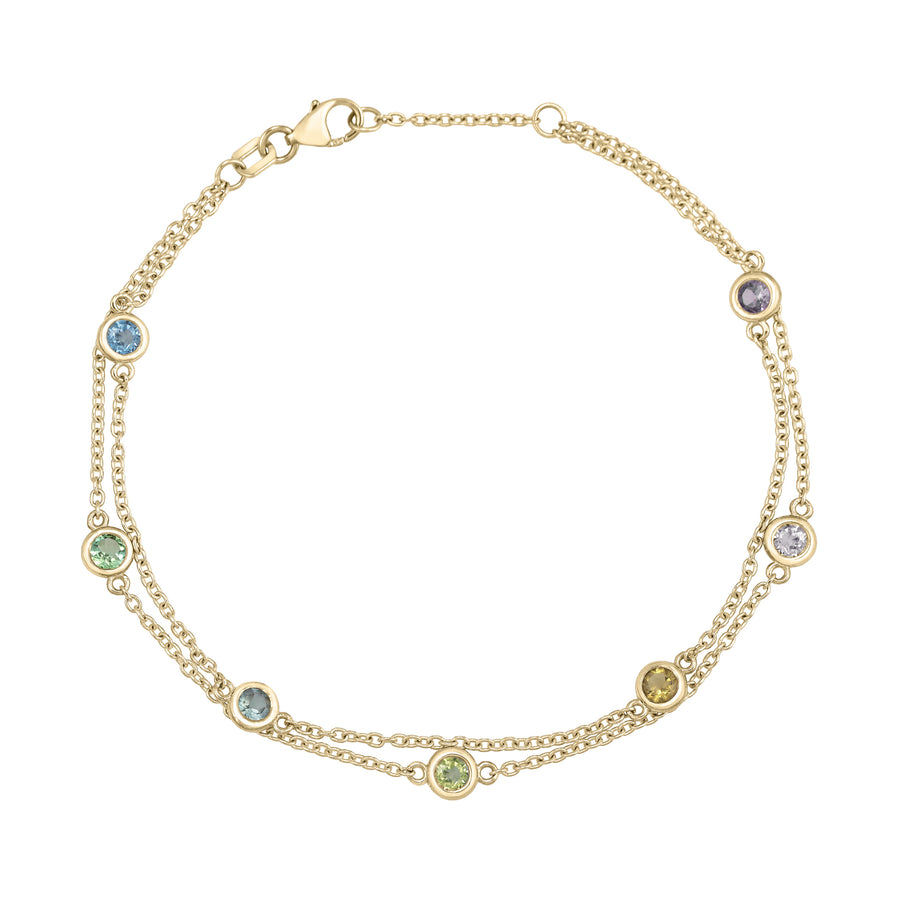
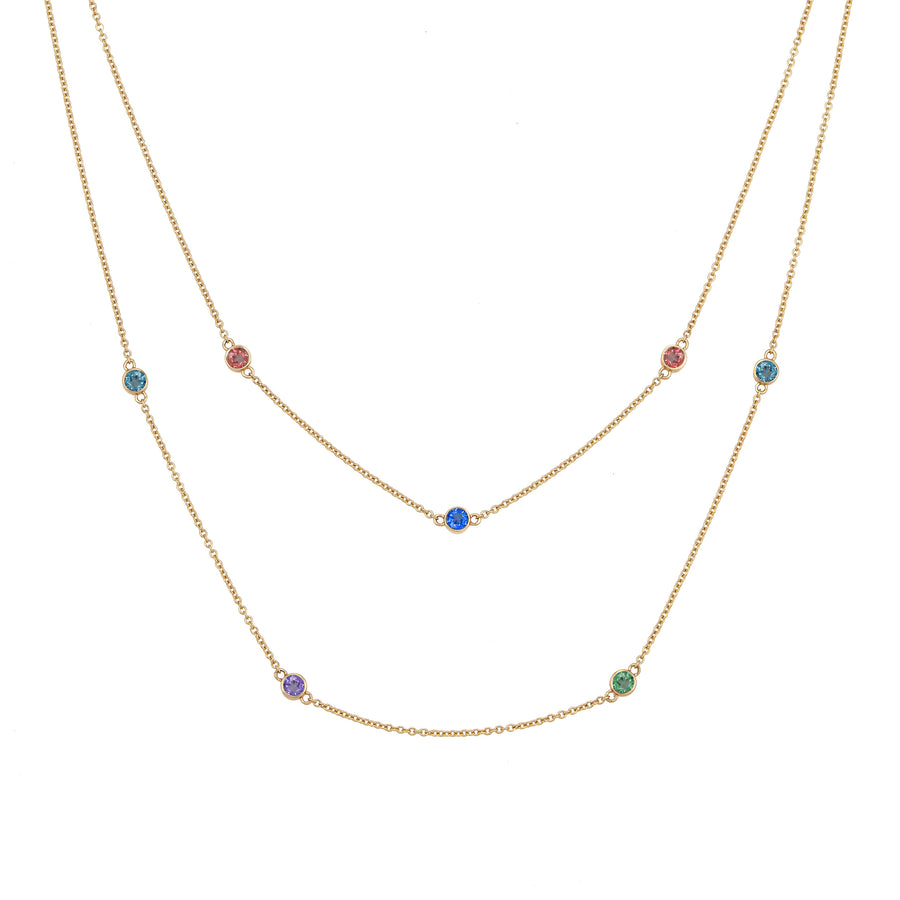
One of the things we love about tourmaline is that there isn't just one way for an October birthstone to look. Its wide range of colors makes it possible to choose a stone based on personal taste, favorite colors, or the meaning you want your jewelry to carry.
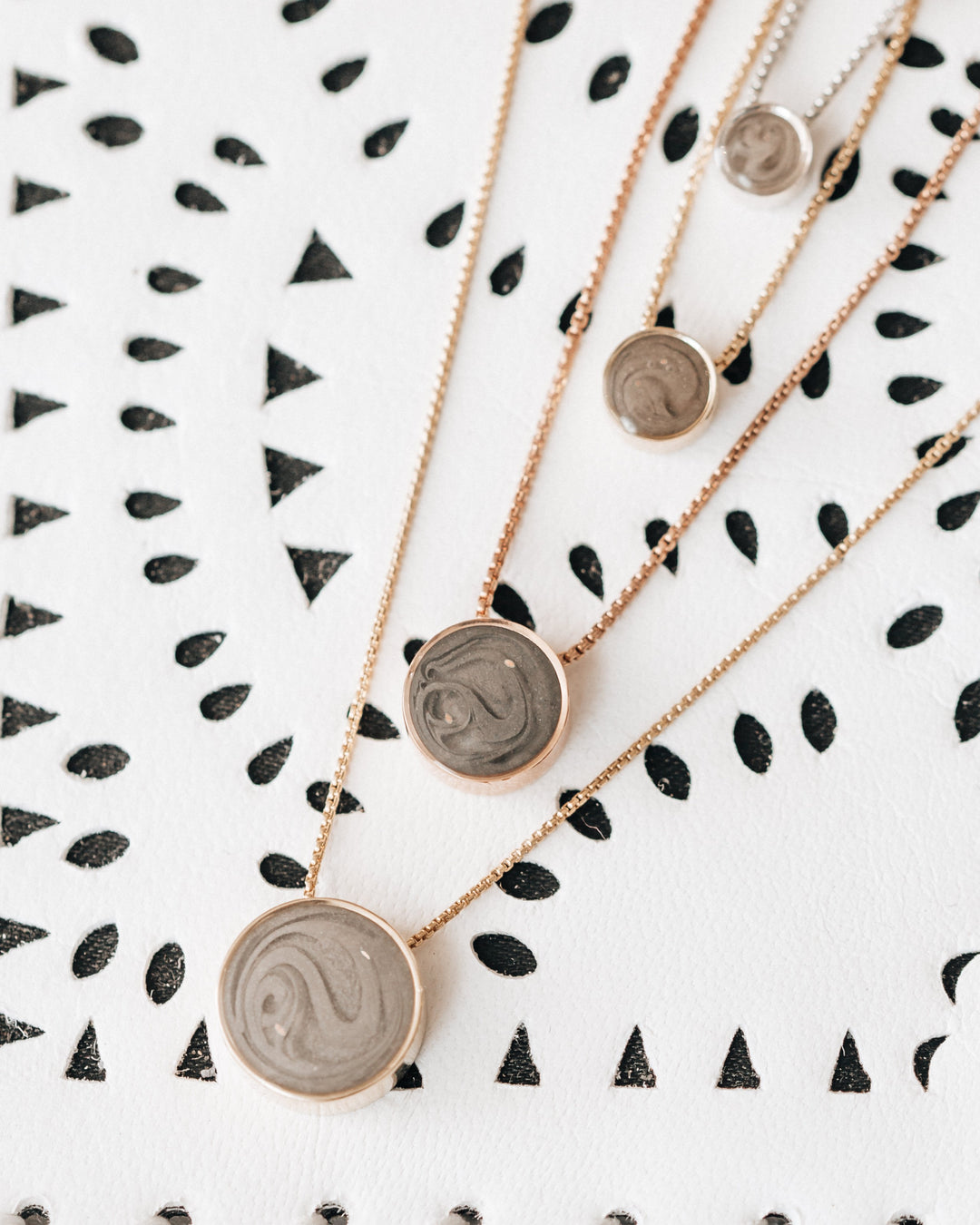
Pink tourmaline is the color we feature for October birthstone jewelry at Close By Me. Its soft pink hue is traditionally associated with love and affection, making it a natural choice for a meaningful keepsake or gift.
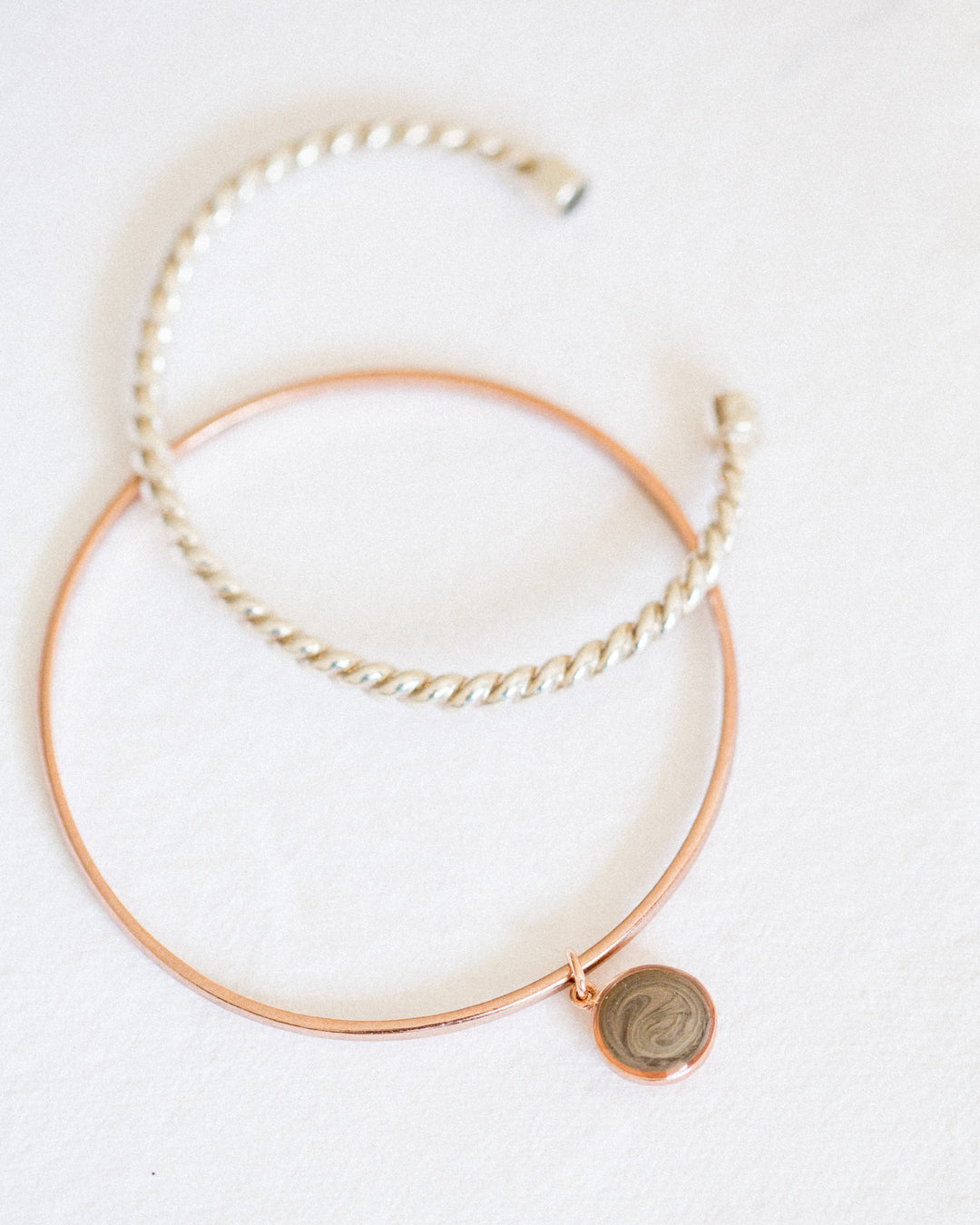
From its connection to October to the symbolism associated with its colors, tourmaline offers many ways to make a birthstone personal. Whether it celebrates a birthday, marks an important connection, or becomes part of a memorial piece, its significance can be entirely your own.
October's Traditional Birthstone: Opal
What Is Opal?
Opal is October’s traditional birthstone, known for its remarkable flashes of color that seem to shift as the stone moves. Unlike most gemstones, which get much of their color from trace elements or other impurities, precious opal can display flashes of blue, green, orange, red, and other rainbow hues because of the way light interacts with its internal structure. This effect is called play-of-color, and it gives each opal its own distinctive appearance.
Unlike quartz and many other familiar gemstones, opal does not have a regular crystalline structure. It is made of hydrated silica—a material composed of silica and water. In precious opal, tiny silica spheres are arranged in a regular pattern, and light diffracts as it interacts with them, producing the stone’s characteristic flashes of color. Opal forms when silica-rich water seeps into cracks and spaces in rock and gradually hardens.
Not all opal displays play-of-color. Precious opal shows these shifting flashes, while common opal does not, although it can still have attractive colors of its own. Opal also varies in appearance, from pale white and translucent varieties to dark-bodied black opal and the yellow, orange, and red hues of fire opal. Black opal is particularly prized because its dark background can make the flashes of color stand out vividly, though a stone’s value depends on factors such as the brightness, range, and pattern of its colors.
Australia is the world’s leading source of precious opal, producing approximately 95% of the global supply, and opal is the country’s national gemstone. It is also found in countries including Ethiopia and Mexico, as well as parts of the United States.
History & Symbolism
The origin of the word opal is uncertain, though one longstanding theory traces it to the Sanskrit word upala, meaning “precious stone". The name is believed to have passed through Greek and Latin before becoming the word we use today. In ancient Rome, opal was highly prized for its shifting colors and was associated with love and hope. The Roman writer Pliny the Elder admired how a single opal could display colors reminiscent of several other gemstones.
Over the centuries, opal inspired a variety of legends and beliefs. Ancient Greeks associated it with prophecy and protection from disease, while European traditions linked it with hope, purity, and truth. Some medieval accounts even claimed that opal could grant invisibility to its wearer—a belief that contributed to its association with thieves. These stories reflect the mystery people found in the stone's shifting colors, rather than any scientifically established properties.
Opal's reputation took a darker turn in the nineteenth century following the publication of Sir Walter Scott's novel Anne of Geierstein in 1829. In the story, a character's magical opal loses its color after being touched by holy water, and the character subsequently dies. The tale helped reinforce the superstition that opals brought bad luck, despite the gemstone's long history of more favorable associations. The belief that opal is unlucky for anyone not born in October is a superstition, not an established birthstone tradition.
Today, opal remains October's traditional birthstone alongside modern tourmaline. Its many colors and distinctive play-of-color have inspired centuries of admiration, while its associations with hope, love, and truth continue to give it personal significance. Opal is also traditionally given to celebrate a 14th wedding anniversary.
Opal in Jewelry
Opal’s beauty comes with an important consideration: it is a relatively soft and delicate gemstone. With a Mohs hardness of approximately 5 to 6.5, it is more vulnerable to scratches and chips than harder gemstones such as tourmaline, sapphire, or diamond. Opal can also be damaged by hard impacts, high heat, and sudden temperature changes.
For these reasons, opal jewelry benefits from careful handling and a protective design. Opals are often cut and polished as cabochons, with smooth, rounded surfaces that showcase their play-of-color. The setting also matters, particularly for pieces like rings that are more likely to be bumped or scraped during everyday wear.
At Close By Me, we feature pink tourmaline as our standard October birthstone option. Opal is not offered by default, but we may be able to accommodate it by special request when the design and setting are suitable. Because of opal’s relative softness and fragility, not every design will be appropriate, and using it may carry additional risks of scratching, chipping, or breakage. If you are interested in incorporating opal into a piece of meaningful jewelry, please contact us before placing your order. We can discuss whether it may be suitable for your chosen design and explain the considerations involved.
Final Thoughts on October's Two Birthstones
From the many hues of tourmaline to the changing colors within opal, October's birthstones are a reminder of just how varied the natural world can be. Each has its own character, history, and beauty—making October a particularly colorful month for gemstones.
Sources:
This birthstone guide was researched using trusted gemological, historical, and educational references, including:
- Australian Museum
-
Gemological Institute of America (GIA)
- Geoscience Australia
- International Colored Gem Association
- International Gem Society (IGS)
- National Museum of Natural History
- United States Geological Survey