
June Birthstone: Alexandrite
June is one of the rare months associated with not one, but three beautiful birthstones: alexandrite, pearl, and moonstone. Each gemstone offers something entirely different — from the dramatic color-changing beauty of alexandrite to the timeless elegance of pearls and the ethereal glow of moonstone.
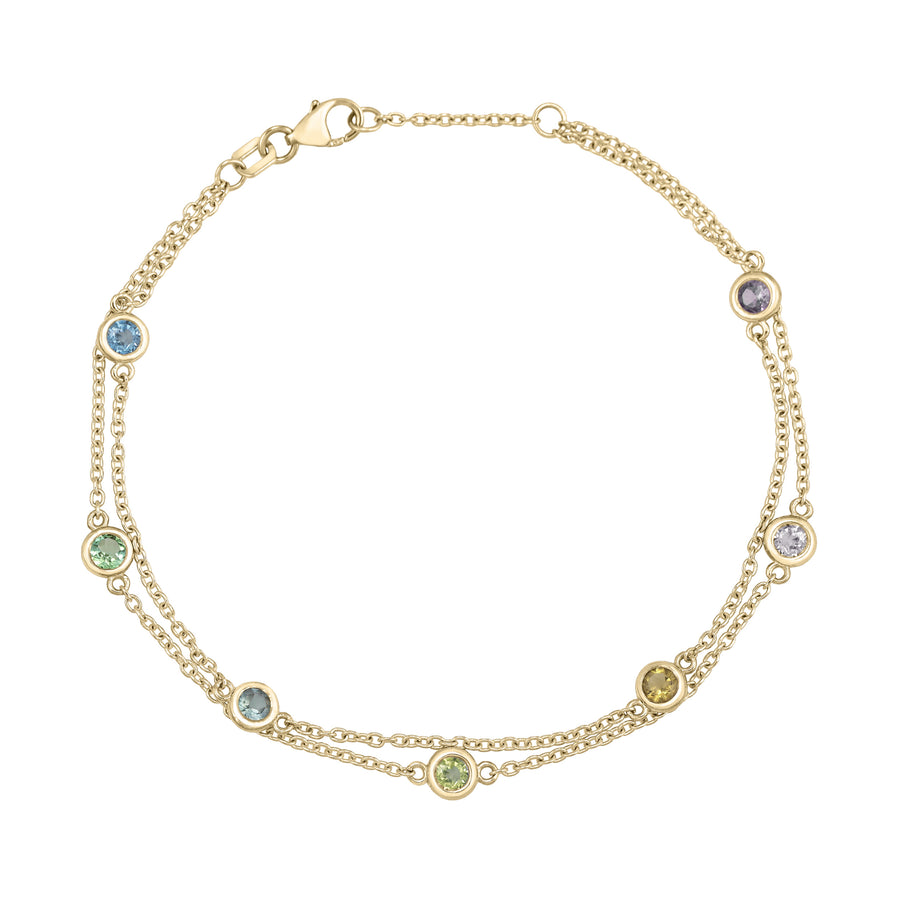
While all three gemstones are recognized as June birthstones, alexandrite is the gemstone featured in our birthstone jewelry collection. Its durability and versatility make it particularly well-suited for fine jewelry designed to be worn and treasured for years to come.
In this guide, we'll take a closer look at alexandrite's fascinating history, meaning, symbolism, and characteristics, while also exploring the enduring appeal of pearl and moonstone. Whether you're celebrating a June birthday, honoring the memory of a loved one, commemorating a meaningful milestone, or simply appreciate exceptional gemstones, these three birthstones each offer a unique story worth discovering.
What Is Alexandrite?
Scientifically, alexandrite is a rare variety of the mineral chrysoberyl. It is best known for its remarkable ability to change color under different lighting conditions, an optical phenomenon that's been coined "the alexandrite effect". In daylight (cool-white fluorescent light or natural sunlight), alexandrite often appears bluish-green, while under incandescent (warm) light, it can shift to reddish-purple. This is caused by the presence of chromium within the crystal structure, which affects how the stone absorbs and reflects different wavelengths of light.
Alexandrite's unique color changing property has earned it the nickname "emerald by day, ruby by night", a description that has captivated gemstone enthusiasts since the stone's discovery in the nineteenth century.

Description: Alexandrite Cushion, 26.75 cts. Bluish green in daylight and purple red under incandescent light. Alexandrites this large are extremely rare.
Photographed by David Weinberg for Alexandrite.net and released to the public domain.
Source: User: at en.wikipedia, CC BY-SA 3.0, via Wikimedia Commons
History & Origins of Alexandrite
First discovered in Russia's Ural Mountains during the 1830s, alexandrite was named after the future Russian emperor, Alexander II. The gemstone's ability to display both red and green hues mirrored the military colors of the Russian Empire at the time, contributing to its popularity and prestige and cementing its enduring association with Imperial Russia.
The original Russian deposits produced alexandrites with exceptionally vivid color changes, and these stones remain the benchmark by which all other alexandrites are judged today. Although the historic Ural Mountain mines have been largely depleted, their legacy continues to shape the gemstone's reputation for rarity and beauty.
Why Is Alexandrite the June Birthstone?
While many gemstones have been used over centuries, alexandrite wasn't discovered until the 1830s, making it far younger than many other birthstones. In 1912, a standardized list of birthstones for the United States was established, with pearl recognized as June's traditional birthstone. Moonstone was later adopted as a modern alternative for the month, and when the list was revised in the early 1950s, alexandrite joined pearl and moonstone as an official June birthstone.
As a result, people born in June have the unique distinction of being represented by three very different gemstones: the timeless elegance of pearl, the luminous glow of moonstone, and the captivating beauty of alexandrite.
Alexandrite Today: Natural and Lab-Grown Stones
Today, natural alexandrite is mined in a handful of regions around the world, including Brazil, Sri Lanka, India, and East Africa (particularly Tanzania and Madagascar). Depending on their geographic origin, alexandrites may display slightly different color ranges and strengths of color change, with fine-quality natural stones remaining extremely rare.
Most alexandrite jewelry available today features lab-grown alexandrite. These gemstones are created in carefully controlled laboratory environments that replicate the conditions under which natural alexandrite forms. Lab-grown alexandrite shares the same chemical composition, crystal structure, hardness, and color-changing properties as its natural counterpart. Because they can be created without the limitations of natural supply, lab-grown alexandrites are significantly more accessible and affordable while still exhibiting the remarkable color-changing effect that makes the gemstone so beloved.
Alexandrite Symbolism & Meaning
Alexandrite's symbolism is closely tied to the unique characteristic that sets it apart from nearly every other gemstone: its ability to change color under different lighting conditions. Because the stone appears to transform before the eye, it has developed a symbolic association with change, adaptability, and personal growth. Many people view alexandrite as a symbol of embracing life's transitions while maintaining balance and resilience.
The gemstone has also been linked with prosperity, good fortune, creativity, and self-discovery. While these meanings vary across cultures and traditions, they all reflect the same sense of transformation and possibility that has captivated admirers since alexandrite's discovery in the nineteenth century.
Physical Properties of Alexandrite
Mohs Hardness: 8.5
On the Mohs scale of hardness, alexandrite ranks at approximately 8.5, making it a relatively hard and durable gemstone suitable for everyday wear. This hardness places it just below sapphire and ruby, and well above many other popular gemstones, helping it resist scratching under normal use.
Refractive Index: 1.746 to 1.755
The refractive index (RI) measures how much a gemstone bends light as it enters and travels through the stone, which plays a key role in its brilliance and visual sparkle. Alexandrite’s high refractive index allows it to reflect light beautifully, giving stones a lively appearance and enhancing their depth of color.
Luster: Vitreous
When cut and polished, alexandrite has a vitreous (glass-like) finish, meaning it reflects light with a bright, clean shine similar to glass.
How to Care for Alexandrite Jewelry
Alexandrite is a durable gemstone, well-suited for many types of jewelry and everyday wear. However, like all fine jewelry, proper care is needed to help preserve its brilliance and beauty for years to come.
With a Mohs hardness of approximately 8.5, alexandrite is resistant to scratching from most materials encountered in daily life, but it can still be damaged by sharp impacts or hard knocks. It is best to remove alexandrite jewelry before activities such as heavy lifting, sports, or household cleaning.
To clean alexandrite jewelry, use warm water, mild soap, and a soft brush or cloth to gently remove any buildup of dirt or oils. For heavier residue, the piece can be soaked first in a solution of warm water and mild soap for up to 15 minutes. After cleaning, rinse thoroughly and dry with a soft, lint-free cloth. This simple method helps maintain the stone’s natural brilliance without risking damage.
Despite alexandrite's durability, it's best to avoid harsh chemicals, ultrasonic cleaners, and steam cleaning, as these methods may pose a risk depending on the gemstone’s setting or any internal characteristics within the stone.
When not being worn, store alexandrite jewelry separately from other pieces to prevent accidental scratching of the stone or metal. A soft pouch or a lined jewelry box kept in a cool, dry place is ideal.
Conclusion
Alexandrite remains one of the world's most sought-after gemstones. Its shifting colors, limited natural supply, and rich history have earned it a place among the most treasured birthstones and collector gems. As the modern birthstone for June, alexandrite offers those born at the beginning of summer a gemstone unlike any other. Its associations with transformation, harmony, and intuition add another layer of meaning to an already captivating stone, making it a thoughtful and symbolic choice for celebrating a June birthday or honoring a cherished June-born loved one.
June's Other Birthstones: Pearl & Moonstone
What Is Pearl?
A pearl is an organic gemstone formed in a very different way from most other birthstones: Instead of forming within the Earth’s crust under heat and pressure, pearls are created within living mollusks, such as oysters and mussels, in both saltwater and freshwater environments. When a small irritant enters the mollusk’s shell, layers of nacre (a combination of calcium carbonate and organic compounds, also known as mother-of-pearl) gradually build up over time, forming a pearl.
Today, most pearls on the market are cultured pearls, meaning their formation is initiated by human intervention in controlled pearl farming environments, though the nacre-building process remains entirely natural. Both natural and cultured pearls can be considered genuine pearls, and their value is determined by quality factors rather than origin alone. The most highly valued pearls are typically those with strong luster, smooth surfaces, attractive symmetry, and desirable shape. While round pearls have historically been the most prized for classic jewelry designs, pearls also come in a wide range of shapes, including baroque and drop forms, each offering its own distinctive beauty.

Description: Strands of freshwater pearls threaded on silk. Natural white baroque, round and dyed blue.
Studio photography in the workshop of Sophies Silver, Gåseberg, Lysekil Municipality, Sweden.
Source: W.carter, CC BY 4.0, via Wikimedia Commons
History & Symbolism of Pearl
Pearls have been admired for thousands of years and are among the oldest known gemstones used in jewelry. Ancient civilizations across the Middle East, Asia, and Europe prized pearls for their natural beauty and rarity, often associating them with wealth, status, and refinement.
Historical accounts show that pearls were highly valued by royalty and nobility, frequently used in ceremonial jewelry, clothing embellishments, and royal adornment. Their soft, luminous appearance contributed to long-standing associations with purity, wisdom, and elegance.
In many cultures, pearls were also surrounded by mythology and symbolism. Ancient beliefs described them as gifts from the sea, celestial tears, or symbols of the moon due to their soft, glowing appearance. Greek traditions associated pearls with love and marriage, while some Asian folklore connected them with wisdom, often depicting pearls as treasures guarded by dragons. Pearls were also sometimes believed to bring good fortune when given as a gift in a spirit of love, generosity, or goodwill.
While these meanings are rooted in cultural traditions and folklore rather than scientific fact, pearls continue to be treasured for their timeless beauty and rich historical significance.
Pearl in Jewelry
Pearls have remained a cornerstone of jewelry design for centuries, evolving from royal adornments to timeless modern classics. Their value is determined by several quality factors, including luster, surface quality, shape, size, and color. Pearls are the only gemstones that are typically found in a wearable form without cutting or polishing, meaning they can be used in jewelry in the same natural state in which they are harvested.
Traditionally, perfectly round pearls have been used in classic strand necklaces, a style historically associated with royalty and formal attire. Today, pearls are also widely used in earrings, pendants, and contemporary designs, with baroque and drop-shaped pearls offering more organic and modern aesthetics.
On the Mohs scale of hardness, pearls range from approximately 2.5 to 3, making them significantly softer than most gemstones. Because of this softness, pearls are more sensitive to scratching, heat, and chemicals. When cared for properly, however, well-formed pearls can be surprisingly durable despite their softness.
From ancient jewelry collections to modern heirloom pieces, pearls continue to represent natural beauty, elegance, and timeless sophistication.
What Is Moonstone?
Moonstone is a semi-precious gemstone from the feldspar group, a mineral family that makes up over half of the Earth's rocky crust. It is best known for its soft, glowing appearance, which is a distinctive optical phenomenon called adularescence. Adularescence refers to the appearance of a soft, billowy light that seems to float just beneath the surface. This glow can range from silvery white to subtle flashes of blue, peach, gray, or rainbow tones, giving each stone a unique and ethereal appearance.

Description: Moonstone 27mm long from the mine at Meetiyagoda in Sri Lanka
Source: Wouter Hagens, CC BY-SA 4.0, via Wikimedia Commons
History & Symbolism of Moonstone
For centuries, moonstone has been associated with intuition, emotional balance, and new beginnings. Ancient cultures across Europe and Asia were drawn to its soft, glowing appearance, with both ancient Romans and cultures of the Indian subcontinent believing the stone was formed from solidified moonlight.
Across various traditions, moonstone has also been linked to themes of protection, guidance, and inner clarity. It has often been viewed as a stone that supports emotional insight and reflection, with its shifting glow interpreted as a representation of life’s natural cycles and transitions.
Historical lore also describes moonstone as a “traveler’s stone", believed in some cultures to offer protection and good fortune for those on journeys, especially when traveling at night. Its connection to the moon has further reinforced its symbolic ties to cycles, change, and renewal.
While these meanings are rooted in cultural tradition and folklore rather than scientific fact, moonstone continues to be valued today for its calming presence, luminous beauty, and enduring symbolic depth.
Moonstone in Jewelry
Moonstone experienced a resurgence in popularity during the Art Nouveau movement of the late nineteenth and early twentieth centuries. Artists and jewelers of the period were drawn to its ethereal glow and natural beauty, incorporating it into elaborate designs inspired by nature, fantasy, and romanticism. Its prominence in Art Nouveau jewelry helped establish moonstone as one of the era's most iconic gemstones and contributed to its enduring appeal in jewelry design today.
Unlike gemstones prized primarily for brilliance or sparkle, moonstone is admired for its subtle luminescence and ethereal beauty. To best showcase this phenomenon, moonstone is most often cut into smooth cabochons. Faceted moonstones are also used in jewelry, but this produces a brighter, more sparkling effect, whereas cabochon cuts emphasize the stone's soft, billowy glow. Its soft glow and neutral-to-iridescent color palette make it a versatile and elegant option for those who gravitate toward understated beauty and calming symbolism.
On the Mohs scale of hardness, moonstone ranks between 6 and 6.5, making it moderately durable but softer than many gemstones commonly used in everyday jewelry. As a result, moonstone benefits from mindful wear, particularly in rings or other pieces that may be exposed to frequent impacts. With proper care, however, moonstone jewelry can be enjoyed for many years.
From Art Nouveau masterpieces to modern jewelry collections, moonstone continues to captivate admirers with its dreamlike glow, timeless appeal, and connection to centuries of folklore and tradition. For many, moonstone represents transition, hope, and the gentle reminder that even in changing seasons, there is beauty to be found.
Sources:
This birthstone guide was researched using trusted gemological, historical, and educational references, including:
- American Gem Society
https://www.americangemsociety.org/birthstones/june-birthstones/alexandrite-overview/
https://www.americangemsociety.org/the-folklore-of-alexandrite/
https://www.americangemsociety.org/the-folklore-of-pearls/
https://www.americangemsociety.org/the-folklore-of-moonstone/ -
Gemological Institute of America
https://www.gia.edu/alexandrite-history-lore
https://www.gia.edu/gems-gemology/winter-2019-alexandrite-geographic-origin-determination
https://www.gia.edu/alexandrite-care-cleaning
https://www.gia.edu/birthstones/june-birthstones
https://www.gia.edu/pearl
https://www.gia.edu/moonstone
- International Gem Society
https://www.gemsociety.org/article/alexandrite-jewelry-and-gemstone-information/
https://www.gemsociety.org/article/is-synthetic-alexandrite-real-alexandrite/ - National Museum of Natural History
https://naturalhistory.si.edu/explore/collections/geogallery/10002882 - Selected historical and cultural sources
Including classical writings and widely documented folklore referenced through reputable gemological summaries.