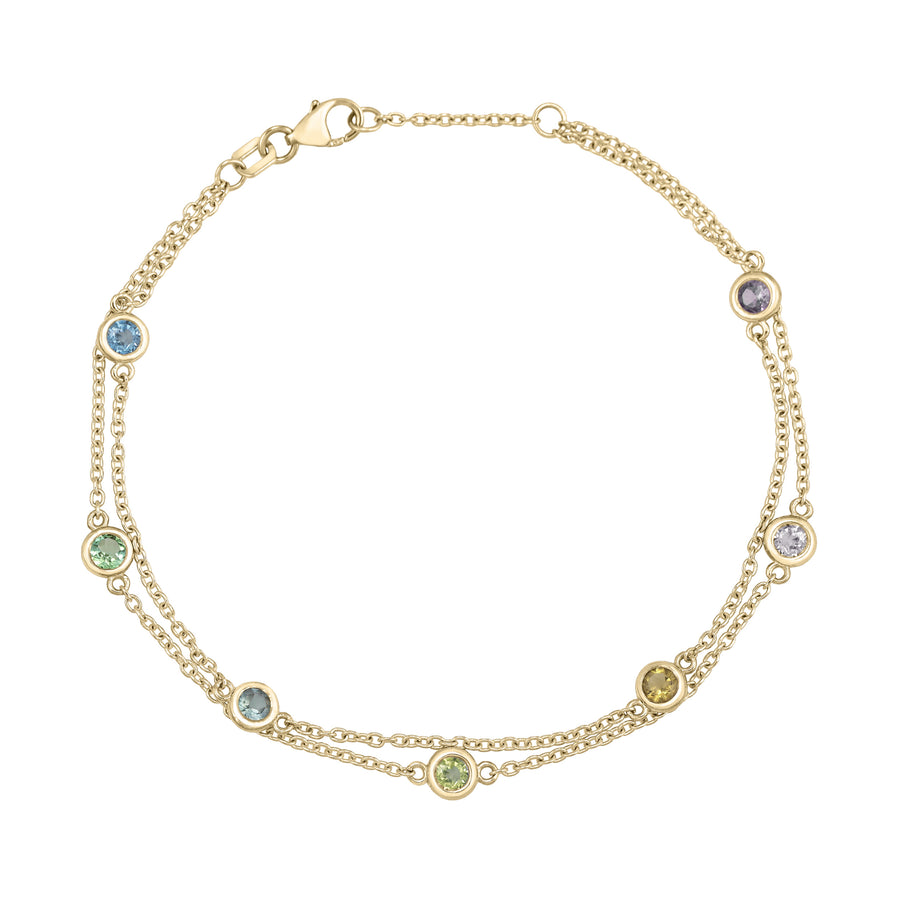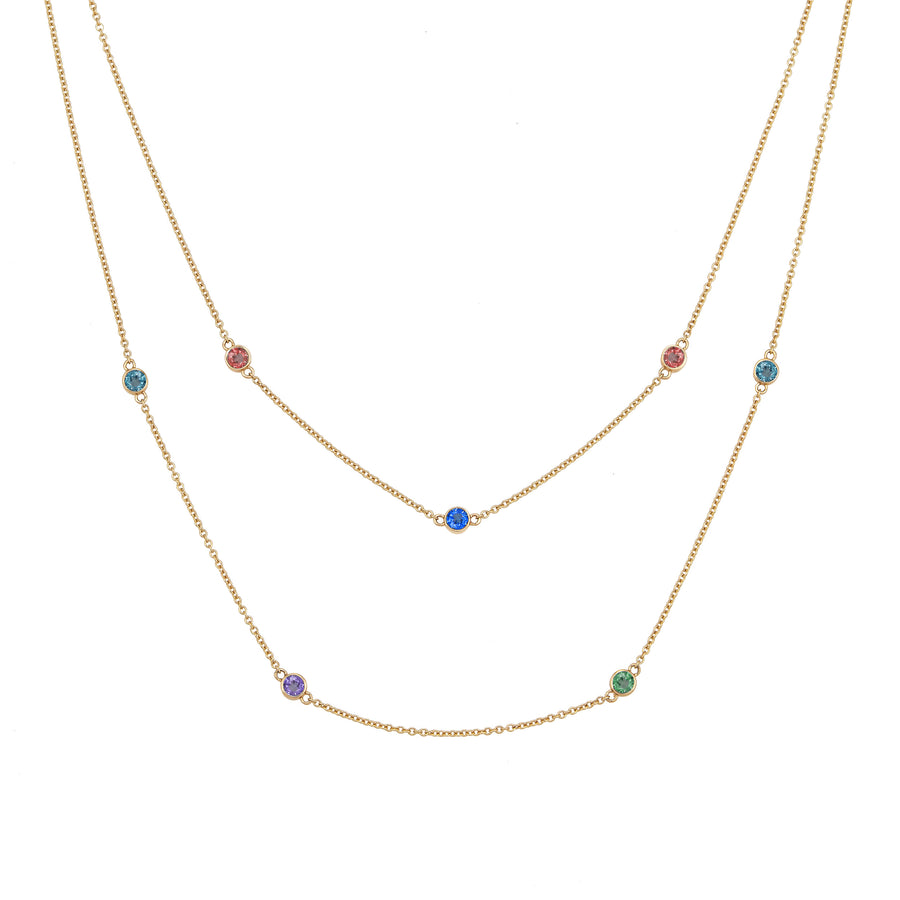

January Birthstone: Garnet
January Birthstone Guide: Garnet — Symbolism, History, and Care
Rich, vibrant, and full of story, garnet has been cherished for thousands of years. Best known for its deep, wine-red glow, garnet appears in everything from royal jewelry and ancient talismans to meaningful modern keepsakes and fine jewelry today.
Whether you’re drawn to its color, its symbolism, or you were born in January, garnet is a stone with depth — one that has carried themes of protection, love, vitality, and safe travels throughout history.
Origin of the Name: “Seeds of the Pomegranate”
The name garnet comes from the Latin word granatus, meaning “seedlike,” because the crystals resemble the jewel-toned seeds inside a pomegranate.
This connection also ties garnet to Greek mythology. According to legend, when Persephone, daughter of Zeus, first entered the domain of Hades, the powerful ruler of the underworld, he offered her pomegranate seeds. After eating them, Persephone was forever bound to spend six months in the underworld, and could wander freely above ground for the other half of the year. Because of this story, garnet became associated with:
- reunion and safe return
- cycles of life
- enduring love and connection across distance
Over time, garnet naturally came to symbolize protection, strength, life energy, and devotion.
Garnet Through History
Ancient Egypt (c. 3100 BCE and Earlier)
The earliest evidence of garnet use dates back to ancient Egypt, where garnets were treasured for both decorative and symbolic purposes. Archaeologists have found garnet beads and inlays in burial jewelry and ceremonial pieces from as early as 3100 BCE, including garnet necklaces found in royal tombs. Egyptians often viewed garnet as a symbol of life and rebirth.
Classical Antiquity: Greece and Rome (8th century BCE–5th century CE)
Garnet’s influence spread throughout the ancient world. Greeks used garnet in carved intaglios and signet rings, while also linking its color to blood, life force, and vitality — associations that resonated with their broader symbolic traditions. Romans similarly relied on garnet signet rings for sealing documents and as personal adornment. Seen as a “stone of fire,” garnet was sometimes described as containing an inner light so powerful it could purify or energize the wearer.
During this period, garnet was widely traded and appreciated across the Mediterranean and into Asia, but this was long before gemological science could differentiate garnet from rubies or spinels. In those ancient times, deep red stones were often collectively referred to as “carbuncles,” meaning “small glowing coals".
Middle Ages (500–1500 CE)
During the early medieval period, particularly among Saxon and Celtic peoples, garnet was regarded as a powerful protective stone. Warriors and nobles wore garnet-set brooches, amulets, and weapon inlays, not only for their beauty, but for the belief that the stone could shield them from harm. Throughout the Middle Ages, garnet came to represent strength, vitality, and divine energy. As this symbolism spread through Europe and into the Crusades, both Christian and Muslim warriors favored garnets, trusting them to inspire courage and offer spiritual protection on the battlefield.
Yet garnet wasn’t always viewed purely as benevolent. In some cultures, its deep red tone linked it to blood and warfare rather than healing. Historical accounts describe garnets being used as projectiles in parts of Central and South Asia, where some believed they would cause more devastating wounds than ordinary bullets. The Hunza warriors in the Kashmir region, for example, fired garnet pellets from bows and later guns, believing the stones would inflict especially severe injuries.
Renaissance (1300–1500)
As Europe entered the Renaissance, garnet’s reputation as a healing and protective stone persisted. Many of the earlier mystical beliefs surrounding garnet continued to circulate alongside new scholarly interest in gemstones. Folklore suggested that keeping a garnet close, such as worn at the neck or sewn into clothing, might protect against misfortune, poison, or illness, while placing one beneath a pillow was thought to ward off bad dreams. Physicians also associated garnet with the heart and blood. Though not medically accurate today, it was once recommended for ailments involving circulation, melancholy, and inflammation — treatments typically reserved for elites because of garnet’s value.
These ideas reflected the era’s blend of faith, symbolism, and early medical theory rather than scientific observation, but they show just how deeply garnet was associated with protection, vitality, and the mysterious forces of the natural world.
Victorian Era (1837–1901)
Victorian jewelers adored garnet, often designing elaborate clusters meant to resemble pomegranate seeds. These dramatic pieces symbolized both elegance and passion, and many remain highly collectible today.
Symbolism & Meaning
Across cultures, garnet has carried layered meaning. It is often associated with:
- Love & devotion – strengthening bonds and emotional connection
- Protection – particularly during travel and new beginnings
- Courage & motivation – encouraging forward movement and confidence
Some legends even suggest garnet promotes the safe return of loved ones separated by distance, making it a beautiful symbol for relationships, family, and deep friendship.
Physical Properties & Caring for Garnet Jewelry
Although garnet is most commonly known for its deep red tones, it actually comes in a surprising range of colors, including:
- green
- orange
- pink
- purple
- near-black
- even rare blues (extremely uncommon)
Garnet ranges from 6.5–7.5 on the Mohs hardness scale, making it durable enough for everyday wear with normal care. To keep garnet jewelry looking its best:
- Clean gently with warm water, mild soap, and a soft brush
- Avoid harsh chemicals or steam cleaners
- Ultrasonic cleaners are not recommended for many garnet varieties
- Store separately to prevent scratching
Garnet as the January Birthstone
Garnet became the official January birthstone in 1912, when the American National Retail Jewelers Association standardized modern birthstone lists. Before that, birthstones were traditionally linked to scripture and spiritual symbolism, rather than specific birth months.
Today, garnet is still associated with:
- new beginnings
- protection during life transitions
- strength during the winter season
- love, passion, and heartfelt connection
It is also a traditional gemstone for second wedding anniversaries, echoing themes of commitment and enduring devotion.
Who Garnet Is Thought to Benefit
Symbolically, garnet is often chosen for:
- people starting something new
- travelers or loved ones separated by distance
- those seeking courage or grounding
- deeply sentimental or romantic gifts
And although garnet is linked with January, its meaning makes it meaningful for anyone.
An Alternative January Stone: Rose Quartz
In more modern interpretations, rose quartz is sometimes embraced as an alternative stone for January, especially for those drawn to something softer and lighter.
With its gentle blush color, rose quartz is associated with:
- compassion and self-love
- emotional healing
- soothing calmness
- nurturing relationships
Some consider it a “sister stone” to garnet; where garnet represents passionate love and protection, rose quartz embodies comfort, tenderness, and peace.
Final Thoughts
Whether worn for its beauty, for its symbolism, or as a meaningful January gift, garnet carries centuries of history and emotional resonance. Its deep glow feels warm and life-giving — a perfect way to begin a new year with intention, strength, and connection.
If you’re exploring meaningful birthstone jewelry, either for yourself or someone special, garnet offers both timeless beauty and a story worth carrying close.
Sources
This birthstone guide was researched using trusted gemological, historical, and educational references, including:
-
Gemological Institute of America
https://www.gia.edu/birthstones/january-birthstones
-
American Gem Society
https://www.americangemsociety.org/birthstones/january-birthstone/garnet-history/
-
International Gem Society
https://www.gemsociety.org/article/garnet-symbolism-legends/
- Selected historical and cultural sources
Including classical writings and widely documented folklore referenced through reputable gemological summaries.